
![[CITYPNG.COM]Recycle Recycling Gray Logo Icon PNG - 2000x2000](https://carolynrobbins.com/wp-content/uploads/elementor/thumbs/CITYPNG.COMRecycle-Recycling-Gray-Logo-Icon-PNG-2000x2000-1-r5rzqaseuhs9zbep9iq5b6a21jinhz8iht1tkz1hmc.webp "[CITYPNG.COM]Recycle Recycling Gray Logo Icon PNG – 2000×2000")
Project Overview
Casablanca Restaurant is located within a remarkable Spanish Mediterranean building across from the beach in Fort Lauderdale, Florida. When I was asked to redesign the restaurant, I immediately recognized that the building itself was the greatest asset.
The client envisioned a modern renovation, including references to the classic film Casablanca through posters and decorative elements. We debated back and forth about covering the beautiful beams, changing the original flooring, and adding layers of decoration to create the feeling of Rick’s Café.
But I felt strongly that the building was already telling the story.
I knew it was a building to restore, not reinvent. Not only because of its architectural elegance, but because with thoughtful restoration it could capture the romance and atmosphere people associate with the famous café in the film. My belief was simple: don’t change what is already special. Reveal it.
Design Story
After much discussion, my client agreed to allow me to move forward with restoration as the guiding principle.
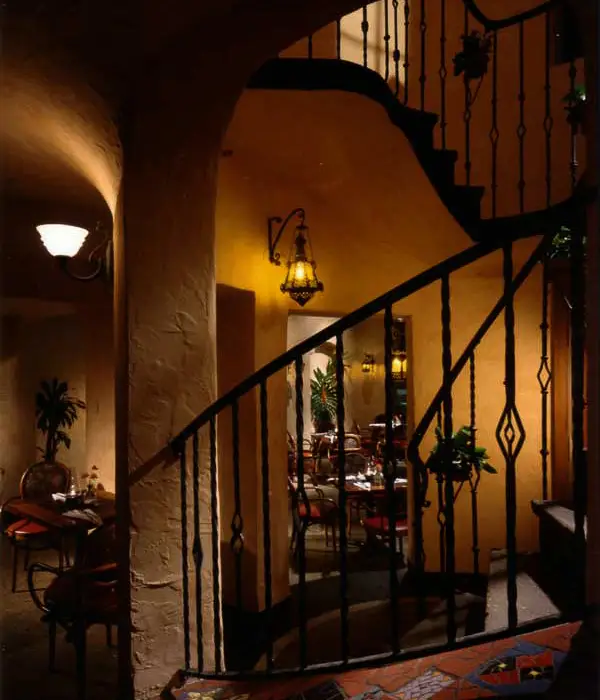
The first step was removing layers of acrylic paint and shellac that had covered the original character of the interior. Walls, ceilings, staircase railings, terrazzo floors, and stone surfaces were carefully stripped back to reveal the building’s natural beauty.
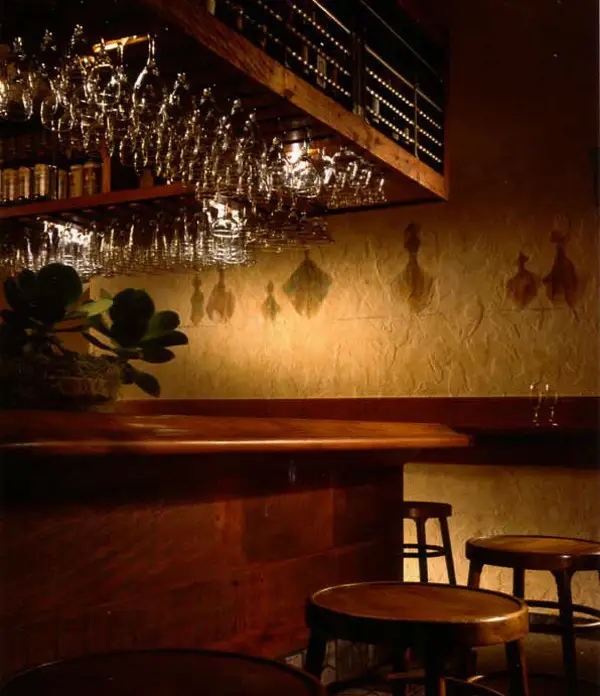
The new design relied on authentic materials and craftsmanship. Tinted plaster walls replaced painted surfaces. Forged iron details reinforced the Mediterranean character. Bronze shelving salvaged from a retired train cabin was given a new life, and recycled lumber became the face of the bars and architectural elements.
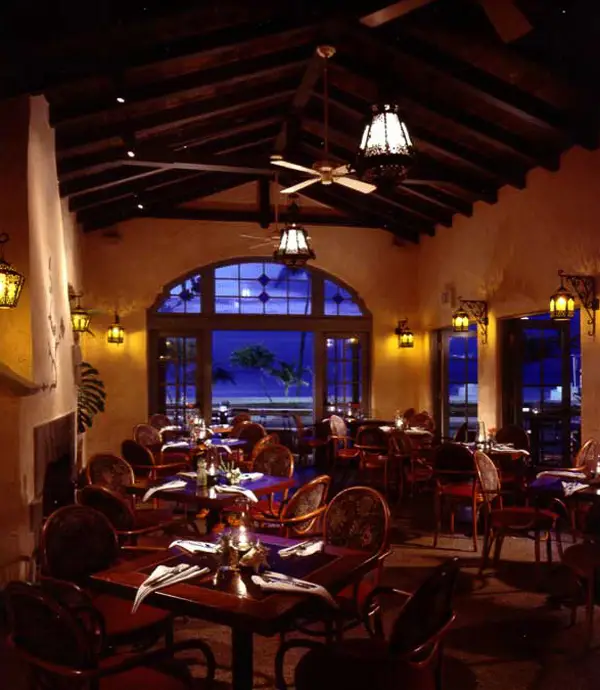
The original overhead beams in the main dining room were scorched with torches to create a deeply textured, aged finish. It was a messy process, but the result brought warmth and authenticity back into the room. The terrazzo floors were restored by grinding away years of coatings until the original stone reappeared.
The exterior stucco was renewed using traditional lime-based paints by Emilio Cianfoni, creating a finish that complemented the historic character of the building.
Lighting became one of the most important elements in creating the atmosphere. Antique Moroccan lanterns were placed throughout the interior and exterior, casting patterned shadows in warm hues. Yellow bulbs were selected to recreate the feeling of torchlight, creating the romance and intimacy of an old-world setting.
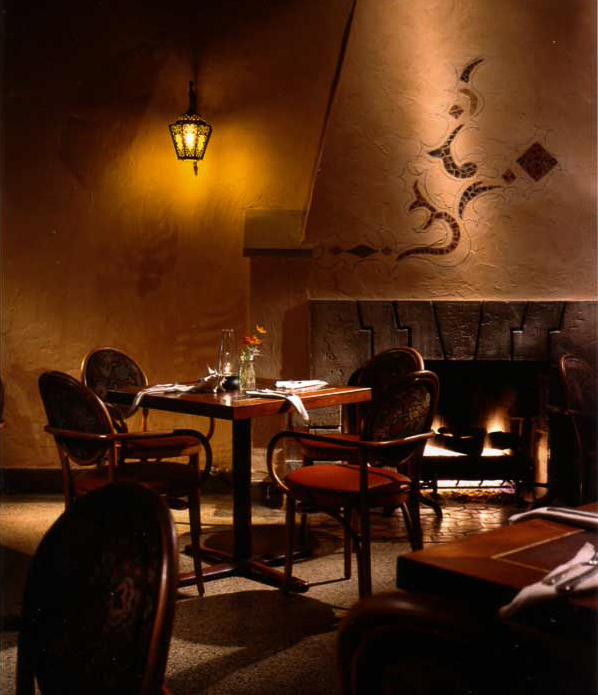
Artists were commissioned to paint subtle palm-leaf shadows onto the wet plaster walls, bringing the feeling of Rick’s Café and the surrounding tropical landscape indoors. Mosaic details were added to the fireplace, and restored bentwood furniture completed the feeling of a timeless Mediterranean interior.
What Made This Project Unique
Casablanca reminded me of one of the most important lessons in design:
The designer’s role is not always to add. Sometimes the greatest design decision is knowing what must be uncovered.
My believe this project was successful because we listened to the building. The architecture, the materials, the light, and the ocean beyond the doors already contained everything needed to create a memorable experience.
After the project was complete and I was standing outside on the terrace, hearing the sound of the surf, I was reminded that the most powerful spaces are often created not by adding more, but by recognizing what is already there.
Since its renovation in 1997, Casablanca has remained one of my longest-running restaurant projects. It continues to demonstrate something I have believed throughout my career: when a place is respected, restored, and allowed to express its own character, people feel the difference.
Photos by Dan Forer
Project Overview
Casablanca Restaurant is located within a remarkable Spanish Mediterranean building across from the beach in Fort Lauderdale, Florida. When I was asked to redesign the restaurant, I immediately recognized that the building itself was the greatest asset.
The client envisioned a modern renovation, including references to the classic film Casablanca through posters and decorative elements. We debated back and forth about covering the beautiful beams, changing the original flooring, and adding layers of decoration to create the feeling of Rick’s Café.
But I felt strongly that the building was already telling the story.
I knew it was a building to restore, not reinvent. Not only because of its architectural elegance, but because with thoughtful restoration it could capture the romance and atmosphere people associate with the famous café in the film. My belief was simple: don’t change what is already special. Reveal it.
Design Story
After much discussion, my client agreed to allow me to move forward with restoration as the guiding principle.
The first step was removing layers of acrylic paint and shellac that had covered the original character of the interior. Walls, ceilings, staircase railings, terrazzo floors, and stone surfaces were carefully stripped back to reveal the building’s natural beauty.
The new design relied on authentic materials and craftsmanship. Tinted plaster walls replaced painted surfaces. Forged iron details reinforced the Mediterranean character. Bronze shelving salvaged from a retired train cabin was given a new life, and recycled lumber became the face of the bars and architectural elements.
The original overhead beams in the main dining room were scorched with torches to create a deeply textured, aged finish. It was a messy process, but the result brought warmth and authenticity back into the room. The terrazzo floors were restored by grinding away years of coatings until the original stone reappeared.
The exterior stucco was renewed using traditional lime-based paints by Emilio Cianfoni, creating a finish that complemented the historic character of the building.
Lighting became one of the most important elements in creating the atmosphere. Antique Moroccan lanterns were placed throughout the interior and exterior, casting patterned shadows in warm hues. Yellow bulbs were selected to recreate the feeling of torchlight, creating the romance and intimacy of an old-world setting.
Artists were commissioned to paint subtle palm-leaf shadows onto the wet plaster walls, bringing the feeling of Rick’s Café and the surrounding tropical landscape indoors. Mosaic details were added to the fireplace, and restored bentwood furniture completed the feeling of a timeless Mediterranean interior.
What Made This Project Unique
Casablanca reminded me of one of the most important lessons in design:
The designer’s role is not always to add. Sometimes the greatest design decision is knowing what must be uncovered.
My believe this project was successful because we listened to the building. The architecture, the materials, the light, and the ocean beyond the doors already contained everything needed to create a memorable experience.
After the project was complete and I was standing outside on the terrace, hearing the sound of the surf, I was reminded that the most powerful spaces are often created not by adding more, but by recognizing what is already there.
Since its renovation in 1997, Casablanca has remained one of my longest-running restaurant projects. It continues to demonstrate something I have believed throughout my career: when a place is respected, restored, and allowed to express its own character, people feel the difference.
Photos by Dan Forer
Project Overview
Casablanca Restaurant is located within a remarkable Spanish Mediterranean building across from the beach in Fort Lauderdale, Florida. When I was asked to redesign the restaurant, I immediately recognized that the building itself was the greatest asset.
The client envisioned a modern renovation, including references to the classic film Casablanca through posters and decorative elements. We debated back and forth about covering the beautiful beams, changing the original flooring, and adding layers of decoration to create the feeling of Rick’s Café.
But I felt strongly that the building was already telling the story.
I knew it was a building to restore, not reinvent. Not only because of its architectural elegance, but because with thoughtful restoration it could capture the romance and atmosphere people associate with the famous café in the film. My belief was simple: don’t change what is already special. Reveal it.
Design Story
After much discussion, my client agreed to allow me to move forward with restoration as the guiding principle.
The first step was removing layers of acrylic paint and shellac that had covered the original character of the interior. Walls, ceilings, staircase railings, terrazzo floors, and stone surfaces were carefully stripped back to reveal the building’s natural beauty.
The new design relied on authentic materials and craftsmanship. Tinted plaster walls replaced painted surfaces. Forged iron details reinforced the Mediterranean character. Bronze shelving salvaged from a retired train cabin was given a new life, and recycled lumber became the face of the bars and architectural elements.
The original overhead beams in the main dining room were scorched with torches to create a deeply textured, aged finish. It was a messy process, but the result brought warmth and authenticity back into the room. The terrazzo floors were restored by grinding away years of coatings until the original stone reappeared.
The exterior stucco was renewed using traditional lime-based paints by Emilio Cianfoni, creating a finish that complemented the historic character of the building.
Lighting became one of the most important elements in creating the atmosphere. Antique Moroccan lanterns were placed throughout the interior and exterior, casting patterned shadows in warm hues. Yellow bulbs were selected to recreate the feeling of torchlight, creating the romance and intimacy of an old-world setting.
Artists were commissioned to paint subtle palm-leaf shadows onto the wet plaster walls, bringing the feeling of Rick’s Café and the surrounding tropical landscape indoors. Mosaic details were added to the fireplace, and restored bentwood furniture completed the feeling of a timeless Mediterranean interior.
What Made This Project Unique
Casablanca reminded me of one of the most important lessons in design:
The designer’s role is not always to add. Sometimes the greatest design decision is knowing what must be uncovered.
My believe this project was successful because we listened to the building. The architecture, the materials, the light, and the ocean beyond the doors already contained everything needed to create a memorable experience.
After the project was complete and I was standing outside on the terrace, hearing the sound of the surf, I was reminded that the most powerful spaces are often created not by adding more, but by recognizing what is already there.
Since its renovation in 1997, Casablanca has remained one of my longest-running restaurant projects. It continues to demonstrate something I have believed throughout my career: when a place is respected, restored, and allowed to express its own character, people feel the difference.
Photos by Dan Forer
Project Overview
Casablanca Restaurant is located within a remarkable Spanish Mediterranean building across from the beach in Fort Lauderdale, Florida. When I was asked to redesign the restaurant, I immediately recognized that the building itself was the greatest asset.
The client envisioned a modern renovation, including references to the classic film Casablanca through posters and decorative elements. We debated back and forth about covering the beautiful beams, changing the original flooring, and adding layers of decoration to create the feeling of Rick’s Café.
But I felt strongly that the building was already telling the story.
I knew it was a building to restore, not reinvent. Not only because of its architectural elegance, but because with thoughtful restoration it could capture the romance and atmosphere people associate with the famous café in the film. My belief was simple: don’t change what is already special. Reveal it.
Design Story
After much discussion, my client agreed to allow me to move forward with restoration as the guiding principle.
The first step was removing layers of acrylic paint and shellac that had covered the original character of the interior. Walls, ceilings, staircase railings, terrazzo floors, and stone surfaces were carefully stripped back to reveal the building’s natural beauty.
The new design relied on authentic materials and craftsmanship. Tinted plaster walls replaced painted surfaces. Forged iron details reinforced the Mediterranean character. Bronze shelving salvaged from a retired train cabin was given a new life, and recycled lumber became the face of the bars and architectural elements.
The original overhead beams in the main dining room were scorched with torches to create a deeply textured, aged finish. It was a messy process, but the result brought warmth and authenticity back into the room. The terrazzo floors were restored by grinding away years of coatings until the original stone reappeared.
The exterior stucco was renewed using traditional lime-based paints by Emilio Cianfoni, creating a finish that complemented the historic character of the building.
Lighting became one of the most important elements in creating the atmosphere. Antique Moroccan lanterns were placed throughout the interior and exterior, casting patterned shadows in warm hues. Yellow bulbs were selected to recreate the feeling of torchlight, creating the romance and intimacy of an old-world setting.
Artists were commissioned to paint subtle palm-leaf shadows onto the wet plaster walls, bringing the feeling of Rick’s Café and the surrounding tropical landscape indoors. Mosaic details were added to the fireplace, and restored bentwood furniture completed the feeling of a timeless Mediterranean interior.
What Made This Project Unique
Casablanca reminded me of one of the most important lessons in design:
The designer’s role is not always to add. Sometimes the greatest design decision is knowing what must be uncovered.
My believe this project was successful because we listened to the building. The architecture, the materials, the light, and the ocean beyond the doors already contained everything needed to create a memorable experience.
After the project was complete and I was standing outside on the terrace, hearing the sound of the surf, I was reminded that the most powerful spaces are often created not by adding more, but by recognizing what is already there.
Since its renovation in 1997, Casablanca has remained one of my longest-running restaurant projects. It continues to demonstrate something I have believed throughout my career: when a place is respected, restored, and allowed to express its own character, people feel the difference.
Photos by Dan Forer
Project Overview
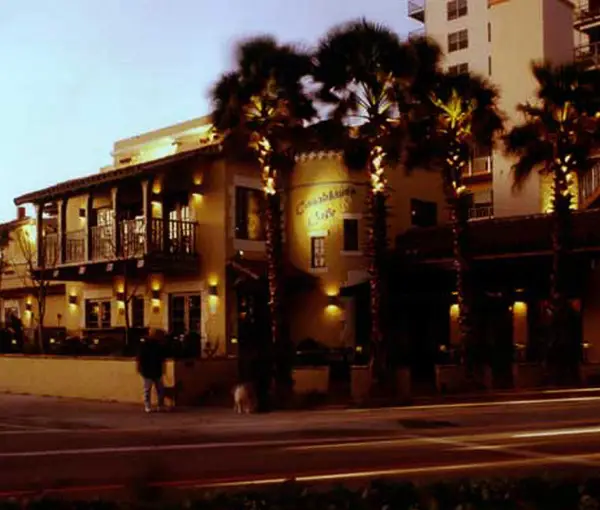
Casablanca Restaurant is located within a remarkable Spanish Mediterranean building across from the beach in Fort Lauderdale, Florida. When I was asked to redesign the restaurant, I immediately recognized that the building itself was the greatest asset.
The client envisioned a modern renovation, including references to the classic film Casablanca through posters and decorative elements. We debated back and forth about covering the beautiful beams, changing the original flooring, and adding layers of decoration to create the feeling of Rick’s Café.
But I felt strongly that the building was already telling the story.
I knew it was a building to restore, not reinvent. Not only because of its architectural elegance, but because with thoughtful restoration it could capture the romance and atmosphere people associate with the famous café in the film. My belief was simple: don’t change what is already special. Reveal it.
Design Story
After much discussion, my client agreed to allow me to move forward with restoration as the guiding principle.
The first step was removing layers of acrylic paint and shellac that had covered the original character of the interior. Walls, ceilings, staircase railings, terrazzo floors, and stone surfaces were carefully stripped back to reveal the building’s natural beauty.
The new design relied on authentic materials and craftsmanship. Tinted plaster walls replaced painted surfaces. Forged iron details reinforced the Mediterranean character. Bronze shelving salvaged from a retired train cabin was given a new life, and recycled lumber became the face of the bars and architectural elements.
The original overhead beams in the main dining room were scorched with torches to create a deeply textured, aged finish. It was a messy process, but the result brought warmth and authenticity back into the room. The terrazzo floors were restored by grinding away years of coatings until the original stone reappeared.
The exterior stucco was renewed using traditional lime-based paints by Emilio Cianfoni, creating a finish that complemented the historic character of the building.
Lighting became one of the most important elements in creating the atmosphere. Antique Moroccan lanterns were placed throughout the interior and exterior, casting patterned shadows in warm hues. Yellow bulbs were selected to recreate the feeling of torchlight, creating the romance and intimacy of an old-world setting.
Artists were commissioned to paint subtle palm-leaf shadows onto the wet plaster walls, bringing the feeling of Rick’s Café and the surrounding tropical landscape indoors. Mosaic details were added to the fireplace, and restored bentwood furniture completed the feeling of a timeless Mediterranean interior.
What Made This Project Unique
Casablanca reminded me of one of the most important lessons in design:
The designer’s role is not always to add. Sometimes the greatest design decision is knowing what must be uncovered.
My believe this project was successful because we listened to the building. The architecture, the materials, the light, and the ocean beyond the doors already contained everything needed to create a memorable experience.
After the project was complete and I was standing outside on the terrace, hearing the sound of the surf, I was reminded that the most powerful spaces are often created not by adding more, but by recognizing what is already there.
Since its renovation in 1997, Casablanca has remained one of my longest-running restaurant projects. It continues to demonstrate something I have believed throughout my career: when a place is respected, restored, and allowed to express its own character, people feel the difference.
Photos by Dan Forer
Project Overview
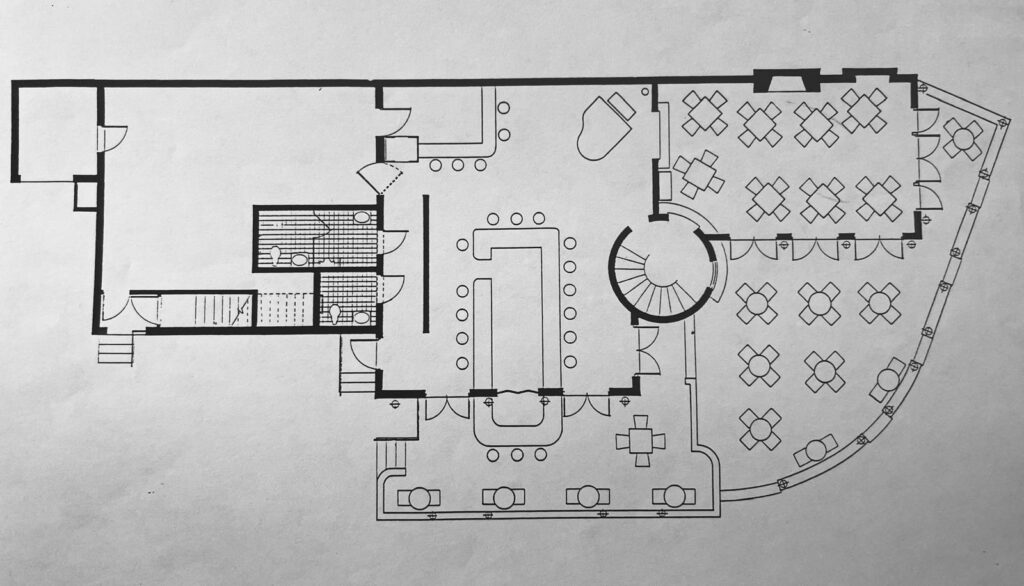
Casablanca Restaurant is located within a remarkable Spanish Mediterranean building across from the beach in Fort Lauderdale, Florida. When I was asked to redesign the restaurant, I immediately recognized that the building itself was the greatest asset.
The client envisioned a modern renovation, including references to the classic film Casablanca through posters and decorative elements. We debated back and forth about covering the beautiful beams, changing the original flooring, and adding layers of decoration to create the feeling of Rick’s Café.
But I felt strongly that the building was already telling the story.
I knew it was a building to restore, not reinvent. Not only because of its architectural elegance, but because with thoughtful restoration it could capture the romance and atmosphere people associate with the famous café in the film. My belief was simple: don’t change what is already special. Reveal it.
Design Story
After much discussion, my client agreed to allow me to move forward with restoration as the guiding principle.
The first step was removing layers of acrylic paint and shellac that had covered the original character of the interior. Walls, ceilings, staircase railings, terrazzo floors, and stone surfaces were carefully stripped back to reveal the building’s natural beauty.
The new design relied on authentic materials and craftsmanship. Tinted plaster walls replaced painted surfaces. Forged iron details reinforced the Mediterranean character. Bronze shelving salvaged from a retired train cabin was given a new life, and recycled lumber became the face of the bars and architectural elements.
The original overhead beams in the main dining room were scorched with torches to create a deeply textured, aged finish. It was a messy process, but the result brought warmth and authenticity back into the room. The terrazzo floors were restored by grinding away years of coatings until the original stone reappeared.
The exterior stucco was renewed using traditional lime-based paints by Emilio Cianfoni, creating a finish that complemented the historic character of the building.
Lighting became one of the most important elements in creating the atmosphere. Antique Moroccan lanterns were placed throughout the interior and exterior, casting patterned shadows in warm hues. Yellow bulbs were selected to recreate the feeling of torchlight, creating the romance and intimacy of an old-world setting.
Artists were commissioned to paint subtle palm-leaf shadows onto the wet plaster walls, bringing the feeling of Rick’s Café and the surrounding tropical landscape indoors. Mosaic details were added to the fireplace, and restored bentwood furniture completed the feeling of a timeless Mediterranean interior.
What Made This Project Unique
Casablanca reminded me of one of the most important lessons in design:
The designer’s role is not always to add. Sometimes the greatest design decision is knowing what must be uncovered.
My believe this project was successful because we listened to the building. The architecture, the materials, the light, and the ocean beyond the doors already contained everything needed to create a memorable experience.
After the project was complete and I was standing outside on the terrace, hearing the sound of the surf, I was reminded that the most powerful spaces are often created not by adding more, but by recognizing what is already there.
Since its renovation in 1997, Casablanca has remained one of my longest-running restaurant projects. It continues to demonstrate something I have believed throughout my career: when a place is respected, restored, and allowed to express its own character, people feel the difference.
Photos by Dan Forer