
![[CITYPNG.COM]Recycle Recycling Gray Logo Icon PNG - 2000x2000](https://carolynrobbins.com/wp-content/uploads/elementor/thumbs/CITYPNG.COMRecycle-Recycling-Gray-Logo-Icon-PNG-2000x2000-1-r5rzqaseuhs9zbep9iq5b6a21jinhz8iht1tkz1hmc.webp "[CITYPNG.COM]Recycle Recycling Gray Logo Icon PNG – 2000×2000")
Project Overview
I met Elka Gilmore through a mutual friend. At the time, she was a part owner of Oodles Restaurant in San Francisco and had built a distinguished career as a chef at the Miyako Hotel, known for her innovative Asian Fusion cuisine.
When Elka wanted to elevate the restaurant’s menu and atmosphere, I was excited to collaborate with her. This became my first San Francisco restaurant project, and it presented a challenge from the beginning: a limited budget and an extremely short installation schedule.
Design Story
The existing restaurant had one major obstacle, the lighting. The space was illuminated with all-over fluorescent lighting that felt more like a cafeteria than an upscale dining destination.
I remember lying awake at night wondering how I could transform the atmosphere without a major construction budget. Then I realized the answer might be to eliminate the ceiling entirely.
I called the building inspector and asked if I could install what is known as “festoon lighting.” He agreed, as long as the electrical outlets remained visible. That simple approval became the turning point of the design.
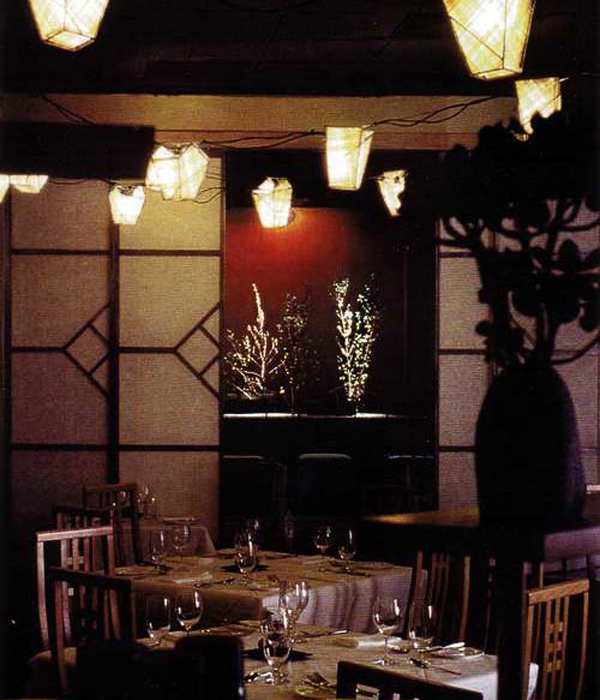
We painted the ceiling a dark color, exposed the wires and cables, and transformed what had been a problem into an architectural feature. I hired a local team of ironworkers to create delicate individual frames for custom lanterns inspired by Chinese take-out containers, with four different designs throughout the space.
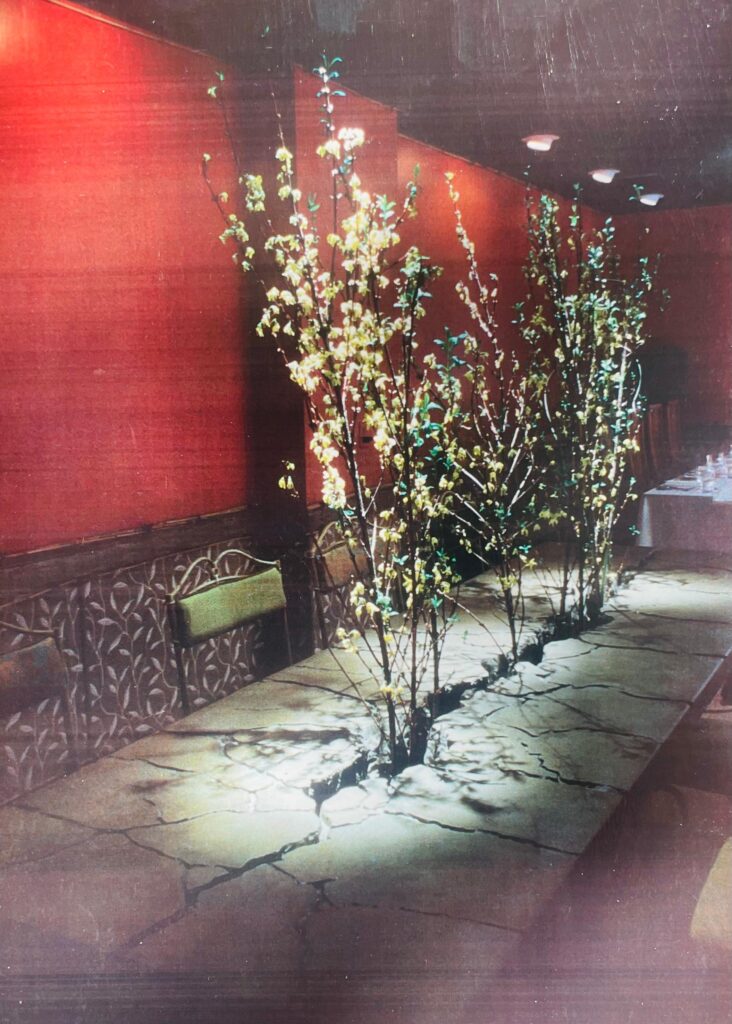
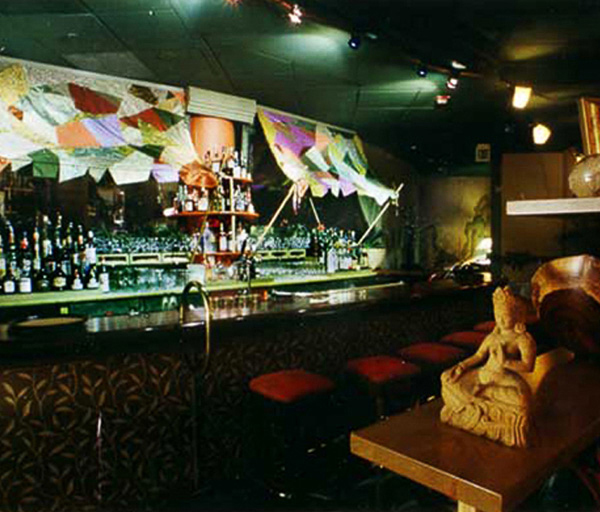
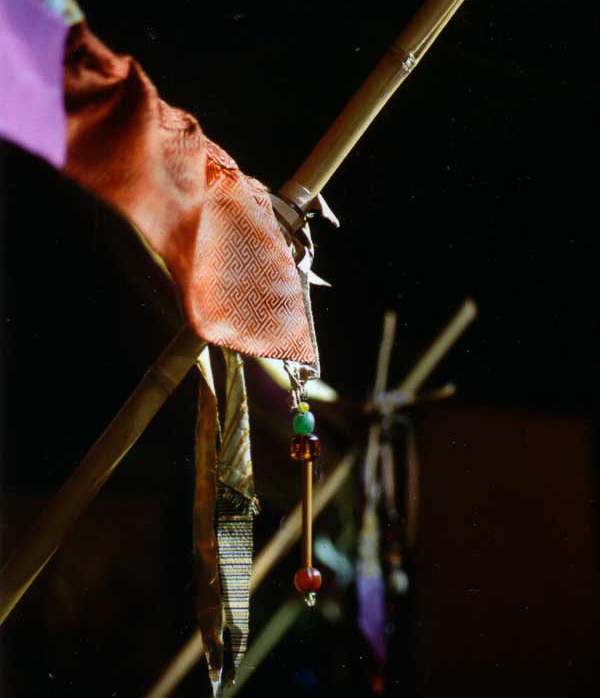
The result was an atmosphere reminiscent of a nighttime Shanghai marketplace. Backlit banana leaf paper created the warm glow of candlelight within the lanterns. Wall murals, irregular sandstone slab flooring, patchwork silk awnings, and a broken bottle mosaic at the bar added layers of texture and discovery.
A waterfall feature flowing from the main dining table into the floor introduced movement and sound, creating an immersive dining experience that engaged more than just the eye.
What Made This Project Unique
Elka’s reminded me that limitations often reveal the most creative solutions.
The challenge was not having enough money or time to create a traditional restaurant renovation. The opportunity was to rethink what a restaurant could become when every decision had to serve a purpose.
By transforming a simple lighting problem into the defining feature of the space, the restaurant developed its own identity. It became an artistic environment where light, sound, texture, and craftsmanship worked together to create a memorable experience.
This project reinforced something I continue to believe: sometimes the best design ideas come not from having everything available, but from asking what possibilities are hidden within the constraints of what already exists.
Photos by Paul Kagawa
Project Overview
I met Elka Gilmore through a mutual friend. At the time, she was a part owner of Oodles Restaurant in San Francisco and had built a distinguished career as a chef at the Miyako Hotel, known for her innovative Asian Fusion cuisine.
When Elka wanted to elevate the restaurant’s menu and atmosphere, I was excited to collaborate with her. This became my first San Francisco restaurant project, and it presented a challenge from the beginning: a limited budget and an extremely short installation schedule.
Design Story
The existing restaurant had one major obstacle, the lighting. The space was illuminated with all-over fluorescent lighting that felt more like a cafeteria than an upscale dining destination.
I remember lying awake at night wondering how I could transform the atmosphere without a major construction budget. Then I realized the answer might be to eliminate the ceiling entirely.
I called the building inspector and asked if I could install what is known as “festoon lighting.” He agreed, as long as the electrical outlets remained visible. That simple approval became the turning point of the design.
We painted the ceiling a dark color, exposed the wires and cables, and transformed what had been a problem into an architectural feature. I hired a local team of ironworkers to create delicate individual frames for custom lanterns inspired by Chinese take-out containers, with four different designs throughout the space.
The result was an atmosphere reminiscent of a nighttime Shanghai marketplace. Backlit banana leaf paper created the warm glow of candlelight within the lanterns. Wall murals, irregular sandstone slab flooring, patchwork silk awnings, and a broken bottle mosaic at the bar added layers of texture and discovery.
A waterfall feature flowing from the main dining table into the floor introduced movement and sound, creating an immersive dining experience that engaged more than just the eye.
What Made This Project Unique
Elka’s reminded me that limitations often reveal the most creative solutions.
The challenge was not having enough money or time to create a traditional restaurant renovation. The opportunity was to rethink what a restaurant could become when every decision had to serve a purpose.
By transforming a simple lighting problem into the defining feature of the space, the restaurant developed its own identity. It became an artistic environment where light, sound, texture, and craftsmanship worked together to create a memorable experience.
This project reinforced something I continue to believe: sometimes the best design ideas come not from having everything available, but from asking what possibilities are hidden within the constraints of what already exists.
Photos by Paul Kagawa
Project Overview
I met Elka Gilmore through a mutual friend. At the time, she was a part owner of Oodles Restaurant in San Francisco and had built a distinguished career as a chef at the Miyako Hotel, known for her innovative Asian Fusion cuisine.
When Elka wanted to elevate the restaurant’s menu and atmosphere, I was excited to collaborate with her. This became my first San Francisco restaurant project, and it presented a challenge from the beginning: a limited budget and an extremely short installation schedule.
Design Story
The existing restaurant had one major obstacle, the lighting. The space was illuminated with all-over fluorescent lighting that felt more like a cafeteria than an upscale dining destination.
I remember lying awake at night wondering how I could transform the atmosphere without a major construction budget. Then I realized the answer might be to eliminate the ceiling entirely.
I called the building inspector and asked if I could install what is known as “festoon lighting.” He agreed, as long as the electrical outlets remained visible. That simple approval became the turning point of the design.
We painted the ceiling a dark color, exposed the wires and cables, and transformed what had been a problem into an architectural feature. I hired a local team of ironworkers to create delicate individual frames for custom lanterns inspired by Chinese take-out containers, with four different designs throughout the space.
The result was an atmosphere reminiscent of a nighttime Shanghai marketplace. Backlit banana leaf paper created the warm glow of candlelight within the lanterns. Wall murals, irregular sandstone slab flooring, patchwork silk awnings, and a broken bottle mosaic at the bar added layers of texture and discovery.
A waterfall feature flowing from the main dining table into the floor introduced movement and sound, creating an immersive dining experience that engaged more than just the eye.
What Made This Project Unique
Elka’s reminded me that limitations often reveal the most creative solutions.
The challenge was not having enough money or time to create a traditional restaurant renovation. The opportunity was to rethink what a restaurant could become when every decision had to serve a purpose.
By transforming a simple lighting problem into the defining feature of the space, the restaurant developed its own identity. It became an artistic environment where light, sound, texture, and craftsmanship worked together to create a memorable experience.
This project reinforced something I continue to believe: sometimes the best design ideas come not from having everything available, but from asking what possibilities are hidden within the constraints of what already exists.
Photos by Paul Kagawa
Project Overview
I met Elka Gilmore through a mutual friend. At the time, she was a part owner of Oodles Restaurant in San Francisco and had built a distinguished career as a chef at the Miyako Hotel, known for her innovative Asian Fusion cuisine.
When Elka wanted to elevate the restaurant’s menu and atmosphere, I was excited to collaborate with her. This became my first San Francisco restaurant project, and it presented a challenge from the beginning: a limited budget and an extremely short installation schedule.
Design Story
The existing restaurant had one major obstacle, the lighting. The space was illuminated with all-over fluorescent lighting that felt more like a cafeteria than an upscale dining destination.
I remember lying awake at night wondering how I could transform the atmosphere without a major construction budget. Then I realized the answer might be to eliminate the ceiling entirely.
I called the building inspector and asked if I could install what is known as “festoon lighting.” He agreed, as long as the electrical outlets remained visible. That simple approval became the turning point of the design.
We painted the ceiling a dark color, exposed the wires and cables, and transformed what had been a problem into an architectural feature. I hired a local team of ironworkers to create delicate individual frames for custom lanterns inspired by Chinese take-out containers, with four different designs throughout the space.
The result was an atmosphere reminiscent of a nighttime Shanghai marketplace. Backlit banana leaf paper created the warm glow of candlelight within the lanterns. Wall murals, irregular sandstone slab flooring, patchwork silk awnings, and a broken bottle mosaic at the bar added layers of texture and discovery.
A waterfall feature flowing from the main dining table into the floor introduced movement and sound, creating an immersive dining experience that engaged more than just the eye.
What Made This Project Unique
Elka’s reminded me that limitations often reveal the most creative solutions.
The challenge was not having enough money or time to create a traditional restaurant renovation. The opportunity was to rethink what a restaurant could become when every decision had to serve a purpose.
By transforming a simple lighting problem into the defining feature of the space, the restaurant developed its own identity. It became an artistic environment where light, sound, texture, and craftsmanship worked together to create a memorable experience.
This project reinforced something I continue to believe: sometimes the best design ideas come not from having everything available, but from asking what possibilities are hidden within the constraints of what already exists.
Photos by Paul Kagawa
Project Overview
I met Elka Gilmore through a mutual friend. At the time, she was a part owner of Oodles Restaurant in San Francisco and had built a distinguished career as a chef at the Miyako Hotel, known for her innovative Asian Fusion cuisine.
When Elka wanted to elevate the restaurant’s menu and atmosphere, I was excited to collaborate with her. This became my first San Francisco restaurant project, and it presented a challenge from the beginning: a limited budget and an extremely short installation schedule.
Design Story
The existing restaurant had one major obstacle, the lighting. The space was illuminated with all-over fluorescent lighting that felt more like a cafeteria than an upscale dining destination.
I remember lying awake at night wondering how I could transform the atmosphere without a major construction budget. Then I realized the answer might be to eliminate the ceiling entirely.
I called the building inspector and asked if I could install what is known as “festoon lighting.” He agreed, as long as the electrical outlets remained visible. That simple approval became the turning point of the design.
We painted the ceiling a dark color, exposed the wires and cables, and transformed what had been a problem into an architectural feature. I hired a local team of ironworkers to create delicate individual frames for custom lanterns inspired by Chinese take-out containers, with four different designs throughout the space.
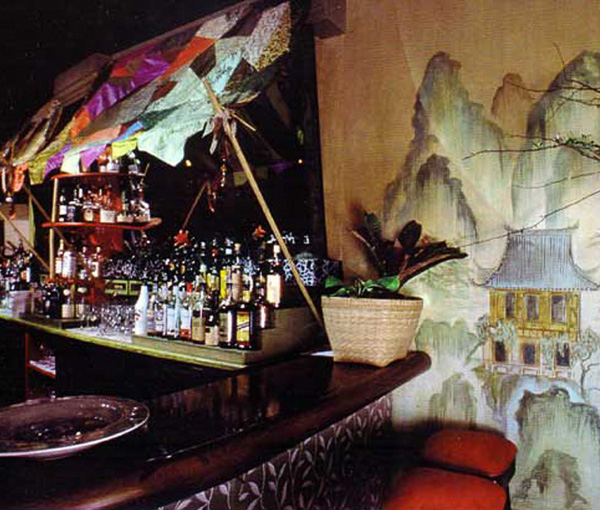
The result was an atmosphere reminiscent of a nighttime Shanghai marketplace. Backlit banana leaf paper created the warm glow of candlelight within the lanterns. Wall murals, irregular sandstone slab flooring, patchwork silk awnings, and a broken bottle mosaic at the bar added layers of texture and discovery.
A waterfall feature flowing from the main dining table into the floor introduced movement and sound, creating an immersive dining experience that engaged more than just the eye.
What Made This Project Unique
Elka’s reminded me that limitations often reveal the most creative solutions.
The challenge was not having enough money or time to create a traditional restaurant renovation. The opportunity was to rethink what a restaurant could become when every decision had to serve a purpose.
By transforming a simple lighting problem into the defining feature of the space, the restaurant developed its own identity. It became an artistic environment where light, sound, texture, and craftsmanship worked together to create a memorable experience.
This project reinforced something I continue to believe: sometimes the best design ideas come not from having everything available, but from asking what possibilities are hidden within the constraints of what already exists.
Photos by Paul Kagawa