
![[CITYPNG.COM]Recycle Recycling Gray Logo Icon PNG - 2000x2000](https://carolynrobbins.com/wp-content/uploads/elementor/thumbs/CITYPNG.COMRecycle-Recycling-Gray-Logo-Icon-PNG-2000x2000-1-r5rzqaseuhs9zbep9iq5b6a21jinhz8iht1tkz1hmc.webp "[CITYPNG.COM]Recycle Recycling Gray Logo Icon PNG – 2000×2000")
Project Overview
Laughing Yak was a small restaurant renovation in Fort Lauderdale, Florida, designed while I was nine months pregnant with my first child. The challenge was to transform a long, narrow existing space into an intimate dining experience centered around Mongolian table-top cooking.
The existing layout followed a common restaurant formula: a closed-off kitchen occupying much of the floor plan, with restrooms and service circulation creating congestion between the kitchen, staff, and guests. I knew there was an opportunity to rethink the entire experience.
Design Story
As I studied the space, I kept imagining a different kind of restaurant, one where guests felt connected to the preparation of their food rather than separated from it.
Instead of hiding the kitchen, I opened it to the dining room. The new layout created a long window into the kitchen, allowing guests to experience the energy of the chefs preparing the fresh ingredients and see the care behind each dish.
The Mongolian dining tradition offered a second layer of interaction. Fresh ingredients were brought directly to each table, where guests could select their choices and enjoy the experience of cooking at their own tabletop grills. The connection between the open kitchen, the chefs’ preparation, and the personal tabletop cooking created a dining experience that felt both theatrical and intimate.
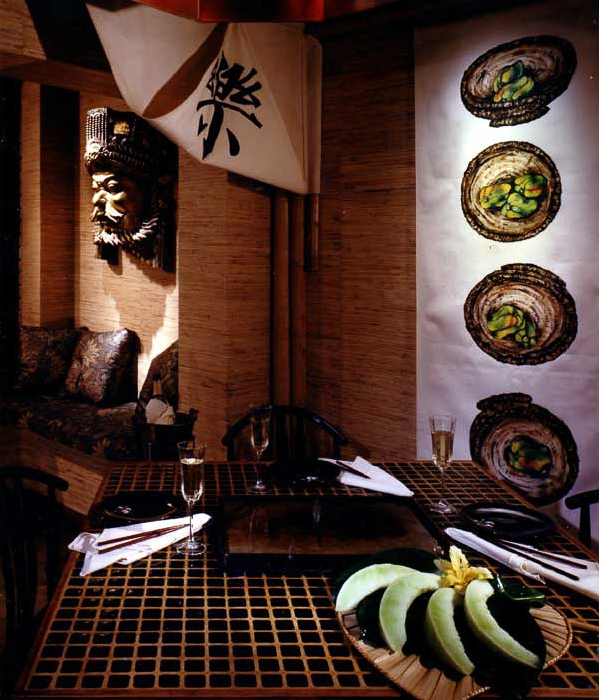
The design became an extension of that marketplace experience. Grass cloth walls, original ethnic artwork, and painted banners by renowned artist Carlos Alfonzo brought warmth and authenticity to the interior. Fresh produce was displayed throughout the restaurant to create the feeling of an outdoor market, with silk replicas used when seasonal ingredients were unavailable.
Mongolian sauces and condiments were served in handmade pottery at each table, reinforcing the handcrafted character of the experience.
Lighting was carefully designed to support both the food and the atmosphere. Focused illumination highlighted the painted banners that separated the dining areas, while the soft amber glow from the table hoods was calculated to create flattering skin tones while still providing the proper light for cooking and enjoying the meal.
What Made This Project Unique
The most memorable part of designing Laughing Yak was the process itself. I remember waddling through the restaurant with my large belly, carefully measuring every decision and considering how each moment of the dining experience would unfold.
That process reinforced something I have carried throughout my career: good design requires careful attention to time, movement, and resources.
When budgets and schedules are limited, thoughtful planning becomes even more important. Taking the time to understand how people move, gather, and experience a space often creates greater value than simply adding more.
Laughing Yak was a small restaurant, but it represented a big idea: when the layout is designed around the experience of the guest, even the most challenging spaces can become memorable.
Project Overview
Laughing Yak was a small restaurant renovation in Fort Lauderdale, Florida, designed while I was nine months pregnant with my first child. The challenge was to transform a long, narrow existing space into an intimate dining experience centered around Mongolian table-top cooking.
The existing layout followed a common restaurant formula: a closed-off kitchen occupying much of the floor plan, with restrooms and service circulation creating congestion between the kitchen, staff, and guests. I knew there was an opportunity to rethink the entire experience.
Design Story
As I studied the space, I kept imagining a different kind of restaurant, one where guests felt connected to the preparation of their food rather than separated from it.
Instead of hiding the kitchen, I opened it to the dining room. The new layout created a long window into the kitchen, allowing guests to experience the energy of the chefs preparing the fresh ingredients and see the care behind each dish.
The Mongolian dining tradition offered a second layer of interaction. Fresh ingredients were brought directly to each table, where guests could select their choices and enjoy the experience of cooking at their own tabletop grills. The connection between the open kitchen, the chefs’ preparation, and the personal tabletop cooking created a dining experience that felt both theatrical and intimate.
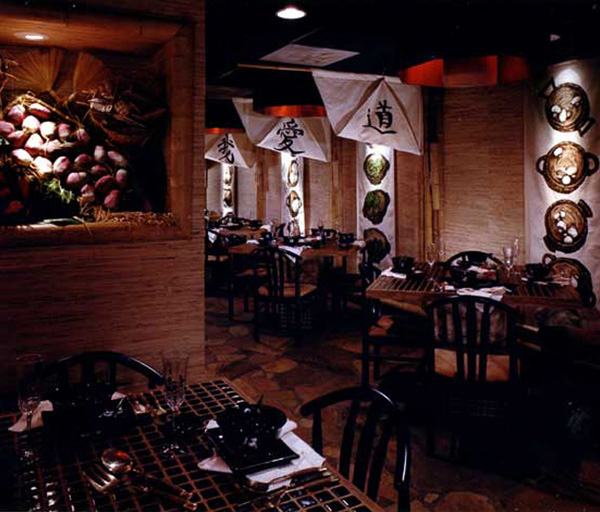
The design became an extension of that marketplace experience. Grass cloth walls, original ethnic artwork, and painted banners by renowned artist Carlos Alfonzo brought warmth and authenticity to the interior. Fresh produce was displayed throughout the restaurant to create the feeling of an outdoor market, with silk replicas used when seasonal ingredients were unavailable.
Mongolian sauces and condiments were served in handmade pottery at each table, reinforcing the handcrafted character of the experience.
Lighting was carefully designed to support both the food and the atmosphere. Focused illumination highlighted the painted banners that separated the dining areas, while the soft amber glow from the table hoods was calculated to create flattering skin tones while still providing the proper light for cooking and enjoying the meal.
What Made This Project Unique
The most memorable part of designing Laughing Yak was the process itself. I remember waddling through the restaurant with my large belly, carefully measuring every decision and considering how each moment of the dining experience would unfold.
That process reinforced something I have carried throughout my career: good design requires careful attention to time, movement, and resources.
When budgets and schedules are limited, thoughtful planning becomes even more important. Taking the time to understand how people move, gather, and experience a space often creates greater value than simply adding more.
Laughing Yak was a small restaurant, but it represented a big idea: when the layout is designed around the experience of the guest, even the most challenging spaces can become memorable.
Project Overview
Laughing Yak was a small restaurant renovation in Fort Lauderdale, Florida, designed while I was nine months pregnant with my first child. The challenge was to transform a long, narrow existing space into an intimate dining experience centered around Mongolian table-top cooking.
The existing layout followed a common restaurant formula: a closed-off kitchen occupying much of the floor plan, with restrooms and service circulation creating congestion between the kitchen, staff, and guests. I knew there was an opportunity to rethink the entire experience.
Design Story
As I studied the space, I kept imagining a different kind of restaurant, one where guests felt connected to the preparation of their food rather than separated from it.
Instead of hiding the kitchen, I opened it to the dining room. The new layout created a long window into the kitchen, allowing guests to experience the energy of the chefs preparing the fresh ingredients and see the care behind each dish.
The Mongolian dining tradition offered a second layer of interaction. Fresh ingredients were brought directly to each table, where guests could select their choices and enjoy the experience of cooking at their own tabletop grills. The connection between the open kitchen, the chefs’ preparation, and the personal tabletop cooking created a dining experience that felt both theatrical and intimate.
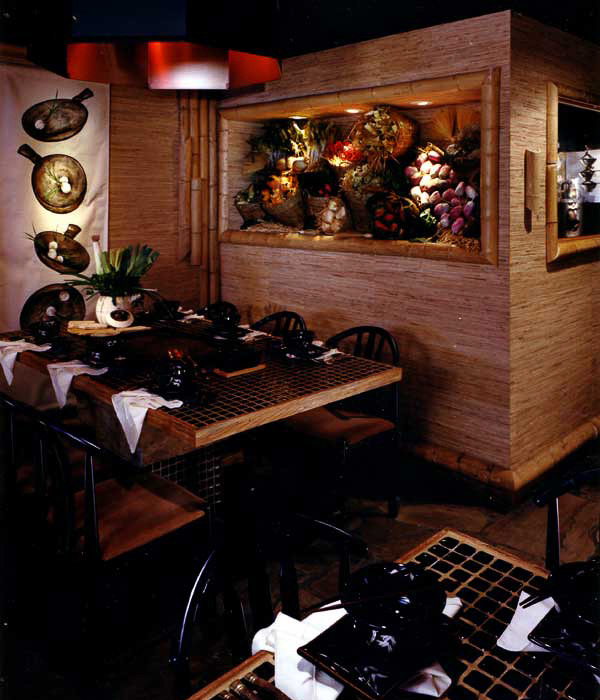
The design became an extension of that marketplace experience. Grass cloth walls, original ethnic artwork, and painted banners by renowned artist Carlos Alfonzo brought warmth and authenticity to the interior. Fresh produce was displayed throughout the restaurant to create the feeling of an outdoor market, with silk replicas used when seasonal ingredients were unavailable.
Mongolian sauces and condiments were served in handmade pottery at each table, reinforcing the handcrafted character of the experience.
Lighting was carefully designed to support both the food and the atmosphere. Focused illumination highlighted the painted banners that separated the dining areas, while the soft amber glow from the table hoods was calculated to create flattering skin tones while still providing the proper light for cooking and enjoying the meal.
What Made This Project Unique
The most memorable part of designing Laughing Yak was the process itself. I remember waddling through the restaurant with my large belly, carefully measuring every decision and considering how each moment of the dining experience would unfold.
That process reinforced something I have carried throughout my career: good design requires careful attention to time, movement, and resources.
When budgets and schedules are limited, thoughtful planning becomes even more important. Taking the time to understand how people move, gather, and experience a space often creates greater value than simply adding more.
Laughing Yak was a small restaurant, but it represented a big idea: when the layout is designed around the experience of the guest, even the most challenging spaces can become memorable.
Project Overview
Laughing Yak was a small restaurant renovation in Fort Lauderdale, Florida, designed while I was nine months pregnant with my first child. The challenge was to transform a long, narrow existing space into an intimate dining experience centered around Mongolian table-top cooking.
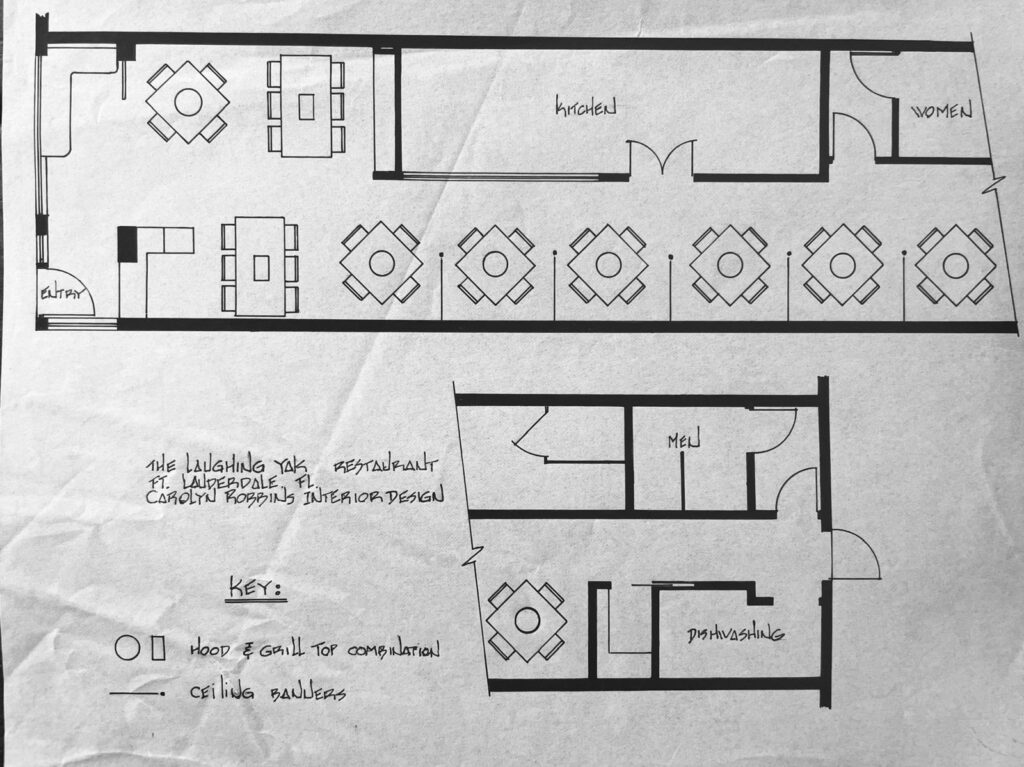
The existing layout followed a common restaurant formula: a closed-off kitchen occupying much of the floor plan, with restrooms and service circulation creating congestion between the kitchen, staff, and guests. I knew there was an opportunity to rethink the entire experience.
Design Story
As I studied the space, I kept imagining a different kind of restaurant, one where guests felt connected to the preparation of their food rather than separated from it.
Instead of hiding the kitchen, I opened it to the dining room. The new layout created a long window into the kitchen, allowing guests to experience the energy of the chefs preparing the fresh ingredients and see the care behind each dish.
The Mongolian dining tradition offered a second layer of interaction. Fresh ingredients were brought directly to each table, where guests could select their choices and enjoy the experience of cooking at their own tabletop grills. The connection between the open kitchen, the chefs’ preparation, and the personal tabletop cooking created a dining experience that felt both theatrical and intimate.
The design became an extension of that marketplace experience. Grass cloth walls, original ethnic artwork, and painted banners by renowned artist Carlos Alfonzo brought warmth and authenticity to the interior. Fresh produce was displayed throughout the restaurant to create the feeling of an outdoor market, with silk replicas used when seasonal ingredients were unavailable.
Mongolian sauces and condiments were served in handmade pottery at each table, reinforcing the handcrafted character of the experience.
Lighting was carefully designed to support both the food and the atmosphere. Focused illumination highlighted the painted banners that separated the dining areas, while the soft amber glow from the table hoods was calculated to create flattering skin tones while still providing the proper light for cooking and enjoying the meal.
What Made This Project Unique
The most memorable part of designing Laughing Yak was the process itself. I remember waddling through the restaurant with my large belly, carefully measuring every decision and considering how each moment of the dining experience would unfold.
That process reinforced something I have carried throughout my career: good design requires careful attention to time, movement, and resources.
When budgets and schedules are limited, thoughtful planning becomes even more important. Taking the time to understand how people move, gather, and experience a space often creates greater value than simply adding more.
Laughing Yak was a small restaurant, but it represented a big idea: when the layout is designed around the experience of the guest, even the most challenging spaces can become memorable.