
![[CITYPNG.COM]Recycle Recycling Gray Logo Icon PNG - 2000x2000](https://carolynrobbins.com/wp-content/uploads/elementor/thumbs/CITYPNG.COMRecycle-Recycling-Gray-Logo-Icon-PNG-2000x2000-1-r5rzqaseuhs9zbep9iq5b6a21jinhz8iht1tkz1hmc.webp "[CITYPNG.COM]Recycle Recycling Gray Logo Icon PNG – 2000×2000")
Project Overview
The Rosens were an active, adventurous family who loved to travel and collect things along the way. They favored neutral tones with bits of color and had a natural appreciation for objects with history and character.
When I discovered jars of broken pottery, china, old coins, tiles and other treasures tucked away in their garage, I immediately saw possibilities. I suggested bringing their collections into the design of the house and allowing them to become part of its character rather than simply keeping them stored away.
The transformation moved the home away from contemporary minimalism toward something much more personal, a combination of rustic barn and modern eclecticism that was far more in keeping with the Rosens’ art, travels and tastes.
Design Story
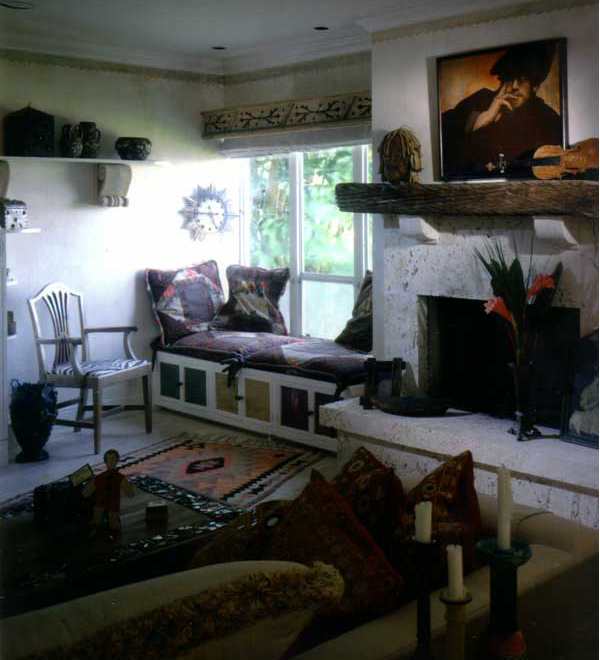
I used the colors and textures I found in their collections to inspire subtle jewel tones against soft mud-colored lime-painted walls. Old wood cabinet panels were stained in faded hues, while fragments of coral stone and collected artifacts were incorporated throughout the house. Patchwork brocade fabrics and found objects were placed so the materials seemed to speak to one another from room to room.
I replaced a conventional stone mantel with an old railroad-tie beam and recycled architectural pieces for window valances. The Rosens were taken with the idea of old-world wall finishes and the beauty of piecing together a collection of old quilt patches for their window-seat covers.
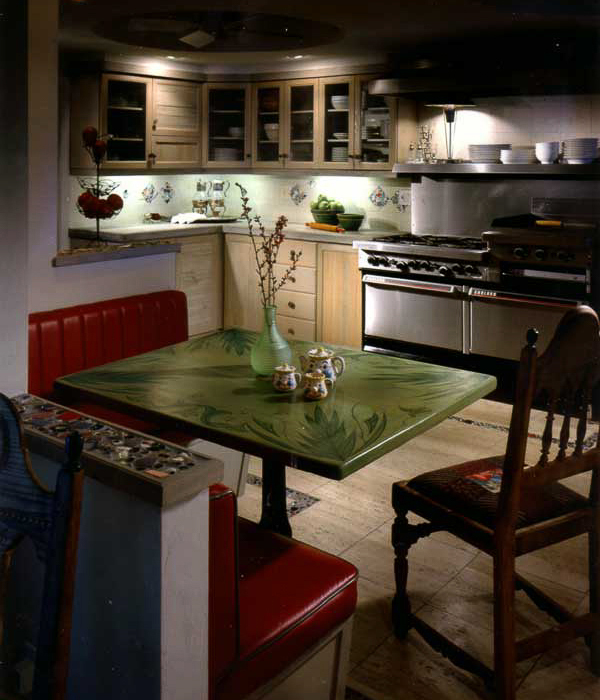
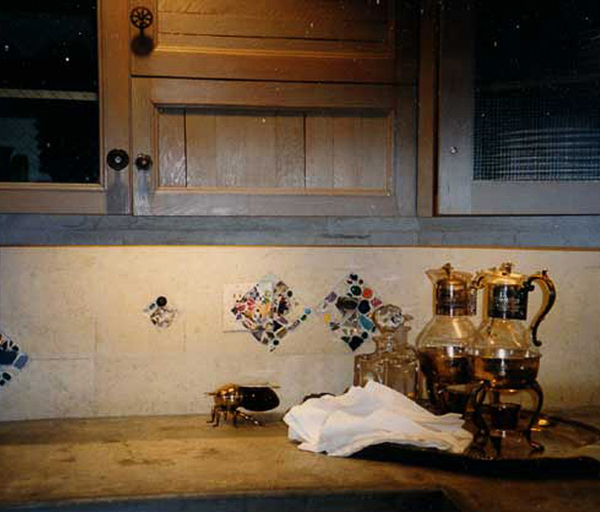
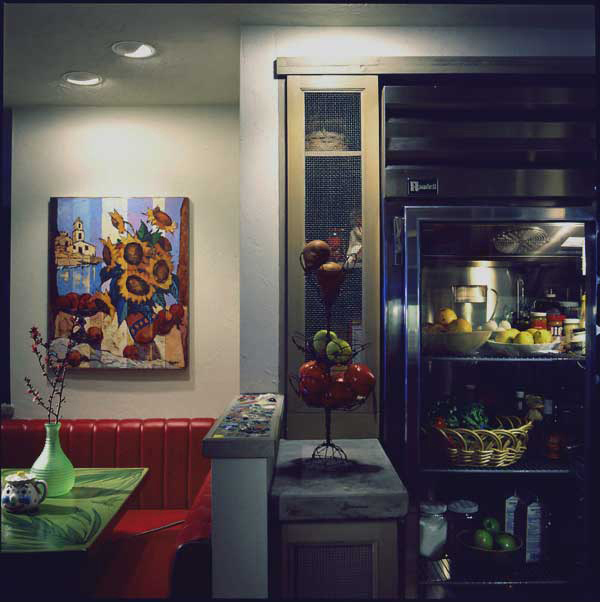
In the kitchen, I replaced the cabinet faces with doors made from up-cycled lath and screening — a fitting choice for the informal, farm-inspired character we developed in the house. The Rosens became increasingly involved, helping to embed their found mosaic pieces on tabletops and as an inset border in the kitchen floor.
What began as my suggestion to use their collections became a genuine collaboration. Their objects weren’t simply accessories added to a finished interior. They became part of the design itself.
What Made This Project Unique
What made the Rosen Residence unique was the way the clients themselves became part of the creative process. I wasn’t simply designing a house around their collections; I was designing with them, knowing their participation was not only welcomed but desired. Nothing needed to match perfectly. In fact, the imperfections and histories of the individual pieces were what gave the house its richness.
The transformation was ultimately less about decorating a house and more about creating a home that belonged unmistakably to the people who lived there. What began as a contemporary, minimal interior became a soft and richly textured world of old and new, rustic and refined, collected and designed, a home shaped as much by the Rosens’ memories and discoveries as by my hand as a designer.
Project Overview
The Rosens were an active, adventurous family who loved to travel and collect things along the way. They favored neutral tones with bits of color and had a natural appreciation for objects with history and character.
When I discovered jars of broken pottery, china, old coins, tiles and other treasures tucked away in their garage, I immediately saw possibilities. I suggested bringing their collections into the design of the house and allowing them to become part of its character rather than simply keeping them stored away.
The transformation moved the home away from contemporary minimalism toward something much more personal, a combination of rustic barn and modern eclecticism that was far more in keeping with the Rosens’ art, travels and tastes.
Design Story
I used the colors and textures I found in their collections to inspire subtle jewel tones against soft mud-colored lime-painted walls. Old wood cabinet panels were stained in faded hues, while fragments of coral stone and collected artifacts were incorporated throughout the house. Patchwork brocade fabrics and found objects were placed so the materials seemed to speak to one another from room to room.
I replaced a conventional stone mantel with an old railroad-tie beam and recycled architectural pieces for window valances. The Rosens were taken with the idea of old-world wall finishes and the beauty of piecing together a collection of old quilt patches for their window-seat covers.
In the kitchen, I replaced the cabinet faces with doors made from up-cycled lath and screening — a fitting choice for the informal, farm-inspired character we developed in the house. The Rosens became increasingly involved, helping to embed their found mosaic pieces on tabletops and as an inset border in the kitchen floor.
What began as my suggestion to use their collections became a genuine collaboration. Their objects weren’t simply accessories added to a finished interior. They became part of the design itself.
What Made This Project Unique
What made the Rosen Residence unique was the way the clients themselves became part of the creative process. I wasn’t simply designing a house around their collections; I was designing with them, knowing their participation was not only welcomed but desired. Nothing needed to match perfectly. In fact, the imperfections and histories of the individual pieces were what gave the house its richness.
The transformation was ultimately less about decorating a house and more about creating a home that belonged unmistakably to the people who lived there. What began as a contemporary, minimal interior became a soft and richly textured world of old and new, rustic and refined, collected and designed, a home shaped as much by the Rosens’ memories and discoveries as by my hand as a designer.
Project Overview
The Rosens were an active, adventurous family who loved to travel and collect things along the way. They favored neutral tones with bits of color and had a natural appreciation for objects with history and character.
When I discovered jars of broken pottery, china, old coins, tiles and other treasures tucked away in their garage, I immediately saw possibilities. I suggested bringing their collections into the design of the house and allowing them to become part of its character rather than simply keeping them stored away.
The transformation moved the home away from contemporary minimalism toward something much more personal, a combination of rustic barn and modern eclecticism that was far more in keeping with the Rosens’ art, travels and tastes.
Design Story
I used the colors and textures I found in their collections to inspire subtle jewel tones against soft mud-colored lime-painted walls. Old wood cabinet panels were stained in faded hues, while fragments of coral stone and collected artifacts were incorporated throughout the house. Patchwork brocade fabrics and found objects were placed so the materials seemed to speak to one another from room to room.
I replaced a conventional stone mantel with an old railroad-tie beam and recycled architectural pieces for window valances. The Rosens were taken with the idea of old-world wall finishes and the beauty of piecing together a collection of old quilt patches for their window-seat covers.
In the kitchen, I replaced the cabinet faces with doors made from up-cycled lath and screening — a fitting choice for the informal, farm-inspired character we developed in the house. The Rosens became increasingly involved, helping to embed their found mosaic pieces on tabletops and as an inset border in the kitchen floor.
What began as my suggestion to use their collections became a genuine collaboration. Their objects weren’t simply accessories added to a finished interior. They became part of the design itself.
What Made This Project Unique
What made the Rosen Residence unique was the way the clients themselves became part of the creative process. I wasn’t simply designing a house around their collections; I was designing with them, knowing their participation was not only welcomed but desired. Nothing needed to match perfectly. In fact, the imperfections and histories of the individual pieces were what gave the house its richness.
The transformation was ultimately less about decorating a house and more about creating a home that belonged unmistakably to the people who lived there. What began as a contemporary, minimal interior became a soft and richly textured world of old and new, rustic and refined, collected and designed, a home shaped as much by the Rosens’ memories and discoveries as by my hand as a designer.
Project Overview
The Rosens were an active, adventurous family who loved to travel and collect things along the way. They favored neutral tones with bits of color and had a natural appreciation for objects with history and character.
When I discovered jars of broken pottery, china, old coins, tiles and other treasures tucked away in their garage, I immediately saw possibilities. I suggested bringing their collections into the design of the house and allowing them to become part of its character rather than simply keeping them stored away.
The transformation moved the home away from contemporary minimalism toward something much more personal, a combination of rustic barn and modern eclecticism that was far more in keeping with the Rosens’ art, travels and tastes.
Design Story
I used the colors and textures I found in their collections to inspire subtle jewel tones against soft mud-colored lime-painted walls. Old wood cabinet panels were stained in faded hues, while fragments of coral stone and collected artifacts were incorporated throughout the house. Patchwork brocade fabrics and found objects were placed so the materials seemed to speak to one another from room to room.
I replaced a conventional stone mantel with an old railroad-tie beam and recycled architectural pieces for window valances. The Rosens were taken with the idea of old-world wall finishes and the beauty of piecing together a collection of old quilt patches for their window-seat covers.
In the kitchen, I replaced the cabinet faces with doors made from up-cycled lath and screening — a fitting choice for the informal, farm-inspired character we developed in the house. The Rosens became increasingly involved, helping to embed their found mosaic pieces on tabletops and as an inset border in the kitchen floor.
What began as my suggestion to use their collections became a genuine collaboration. Their objects weren’t simply accessories added to a finished interior. They became part of the design itself.
What Made This Project Unique
What made the Rosen Residence unique was the way the clients themselves became part of the creative process. I wasn’t simply designing a house around their collections; I was designing with them, knowing their participation was not only welcomed but desired. Nothing needed to match perfectly. In fact, the imperfections and histories of the individual pieces were what gave the house its richness.
The transformation was ultimately less about decorating a house and more about creating a home that belonged unmistakably to the people who lived there. What began as a contemporary, minimal interior became a soft and richly textured world of old and new, rustic and refined, collected and designed, a home shaped as much by the Rosens’ memories and discoveries as by my hand as a designer.